Aneesh Subramanian Co-Directs FERS Summer School on AI and Machine Learning for Earth System Modeling
Prof. Aneesh Subramanian is serving as Co-Director — alongside Prof. Will Chapman (University of Colorado Boulder) — of the FERS Summer School on AI and Machine Learning for Earth System Modeling and Prediction, currently underway June 8–19, 2026 in Bertinoro, Italy. The school is organized by the CMCC Foundation’s Future Earth Research School (FERS).
About the School
The two-week intensive course brings together 25 early-career researchers — including PhD students, postdoctoral fellows, and early-career professionals — for 76 hours of instruction at the forefront of machine learning and AI applications in Earth system science.
Topics covered include:
- Physics-informed and hybrid AI/climate models
- Generative modeling for weather and climate
- Uncertainty quantification and probabilistic forecasting
- Causal inference in Earth science
- Data management and high-performance computing workflows
The curriculum is designed to prepare the next generation of scientists to work across the boundary of traditional numerical modeling and modern machine learning — a skill set increasingly central to operational forecasting, climate projection, and scientific discovery.
Faculty
The school brings together an internationally diverse group of scientists and practitioners:
| Faculty Member | Institution |
|---|---|
| Will Chapman | University of Colorado Boulder |
| Tom Beucler | University of Lausanne |
| Annalisa Bracco | CMCC Foundation |
| Donatello Elia & Marco De Carlo | CMCC Foundation |
| Sandro Fiore | University of Trento |
| Pierre Gentine | Columbia University |
| Donata Giglio | University of Colorado Boulder |
| David Hall | NVIDIA |
| David Lavers | ECMWF |
| Laure Berti-Equille | IRD |
| Mike Sierks | WindBorne Systems |
The faculty roster spans academia, national laboratories, operational forecasting centers, and industry — reflecting the school’s emphasis on the full pipeline from foundational research to real-world deployment.
FERS Feature: Data-Driven Climate Modelling
In parallel with the summer school, FERS has published a companion feature article — “Data-Driven Climate Modelling: How Can AI Improve Climate and Weather Prediction?” — that provides accessible context for the scientific questions at the heart of the curriculum.
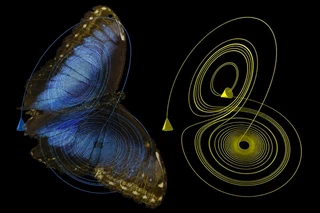
The piece traces the evolution from classical numerical weather prediction, rooted in Edward Lorenz’s insights on chaos and predictability, to today’s AI-driven breakthroughs: ECMWF’s operational deployment of its AI Forecasting System (AIFS) in July 2025, DeepMind’s GenCast outperforming ensemble baselines at 15-day lead times, and the promise of hybrid approaches like NeuralGCM that preserve physical consistency while leveraging data-driven representations of unresolved processes.
The article also examines persistent challenges — including conservation law violations in pure ML models, limited generalization to novel climate states, and data equity disparities that leave the Global South underserved by current observational networks. Aneesh’s lecture content at the summer school addresses several of these open problems directly, drawing on his research in coupled ocean-atmosphere prediction, data assimilation, and machine learning for subseasonal-to-seasonal forecasting.
Course page: fersschool.cmcc.it
FERS feature article: fers.shorthandstories.com
